House rewiring
Rewiring Mount Eden homes
Rewiring in Mount Eden is mostly about houses that have outlived their original electrical installation: villas, bungalows and interwar flats now running heat pumps, induction cooktops and a home office. Our registered electricians plan the rewire around the house, test every circuit at the end and hand over the certificate.

Power came after the houses
Mount Eden was built in a hurry. In 1912 alone the borough recorded 296 building permits, and the suburb was one of the fastest growing in Auckland once the trams opened along Mt Eden Road and Dominion Road. Electricity was slower. According to Auckland Council's Albert-Eden heritage survey, mains power reached only small parts of Mount Eden before the Power Board took over, and most of the district was not reticulated until the 1920s, when electric streetlights replaced gas.
So many of the villas here were wired after they were built, around walls and ceilings that were already finished, at a time when an electric stove was still a novelty. WorkSafe makes the same point about old homes in general: the wiring was not designed for the number of appliances people run today. A rewire replaces that patchwork with circuits sized for how the house is lived in now, and it is often done alongside a switchboard replacement, since an old fuse board and old cable tend to arrive together.
Signs the wiring is due for attention
Villas, bungalows and the interwar flats
Mount Eden still has much of its early housing, mostly one and two storey timber villas, with the 1920s and 1930s bungalows that followed them and the blocks of flats that went up among them, especially along the northern end of Mt Eden Road. Each one rewires differently.
In a timber villa or bungalow, new cable can usually be run through the ceiling space and under the floor and dropped down inside the walls, so the openings are small and sit where switches and sockets go. The interwar flats were typically built in plastered masonry, where cable cannot be fed down a wall cavity, so the routes take more planning and the body corporate may need to agree access to shared roof space or service areas.
While we are working on the house we also look at the line that feeds it. Vector notes that the property owner owns the service line between the point of supply and the meter, and on an older section that line can be as old as the wiring inside.
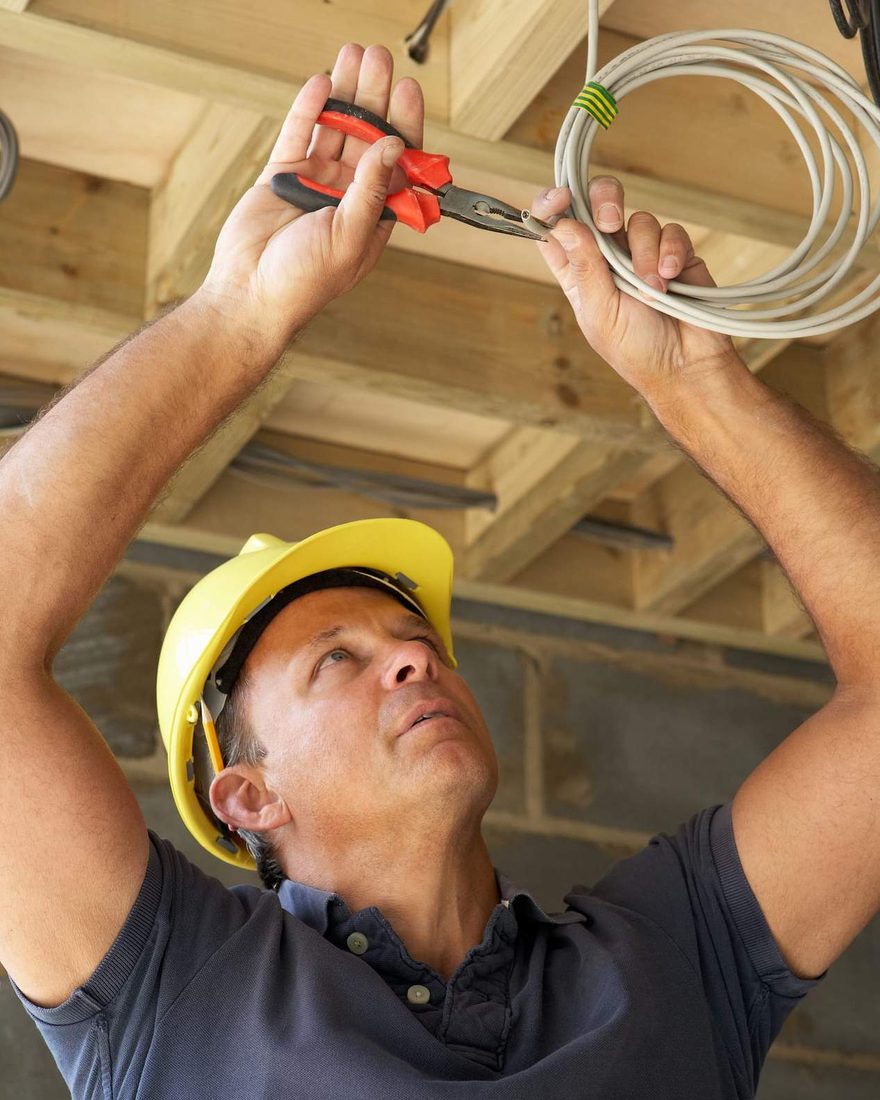
How a rewire usually runs
Look first
Ceiling space, subfloor and switchboard, so the quote is based on what is really there.
Plan the circuits
Kitchen, heat pump, laundry, office and outdoor power each considered, along with any lighting changes you want while the ceilings are open.
Rewire in sections
Old cable disconnected and new cable run area by area, with power kept on in the rest of the house where the layout allows.
Test and certify
Every circuit tested, and a Certificate of Compliance issued for the new fixed wiring.
Rewiring questions
Does a rewire need an inspection?
Going by the Electrical Workers Registration Board's guidance, a rewire on its own is general prescribed electrical work, which the regulations do not require to be inspected. It does need a Certificate of Compliance. If the switchboard is being upgraded to a higher capacity at the same time, that part is high-risk mains work and must be inspected, and we arrange the licensed electrical inspector.
Can we stay in the house?
Often, yes. A rewire done in sections lets most households keep living at home, with power off in one area at a time. A house that is also being renovated is usually quicker to rewire while the rooms are empty.
Will the walls be wrecked?
No. In a timber house most cable goes through the ceiling and under the floor, and the openings are at switch and socket positions. Older linings can be fragile, which is one more reason we look before quoting.
Can you rewire just part of the house?
Yes, a partial rewire is possible, for example the lighting circuits or one wing. Whether it makes sense depends on the condition of the rest, and we will tell you what we find.
What do I keep afterwards?
The Certificate of Compliance for the new wiring. Keep it with the house records, because insurers can ask for it and a buyer will want to see it when you sell.
Power off, breaker tripping, or planning ahead?
Call 021 156 4005 at any hour for a call-out, or send the details of the job and we will get back to you.
Other electrical services in Mount Eden
Switchboard replacement
Old fuse boards replaced with circuit breakers and RCD protection, with the licensed inspection arranged for you when the work needs one.Emergency call-outs and fault finding
Electricians on call 24 hours a day, 7 days a week for lost power, tripping circuits, hot sockets and faults that keep coming back.Heat pumps
Heat pump installation planned around big villa rooms, the wall the indoor unit needs and where the outdoor unit can sit.Lighting
LED downlights, pendants, dimmers and outdoor lighting for paths, decks and gardens.TV aerials and wall-mounting
TV aerials, wall-mounted screens and the power and cabling behind them, run tidily through older walls.Commercial electrical
Electrical work for shops, cafes, offices and kitchens along Mt Eden Road and Dominion Road.Mount Eden enquiries
Contact us
Ring 021 156 4005 for anything urgent, day or night. For everything else, leave your details and a short description of the job below.
021 156 4005- Auckland
- Call-outs 24 hours a day, 7 days a week